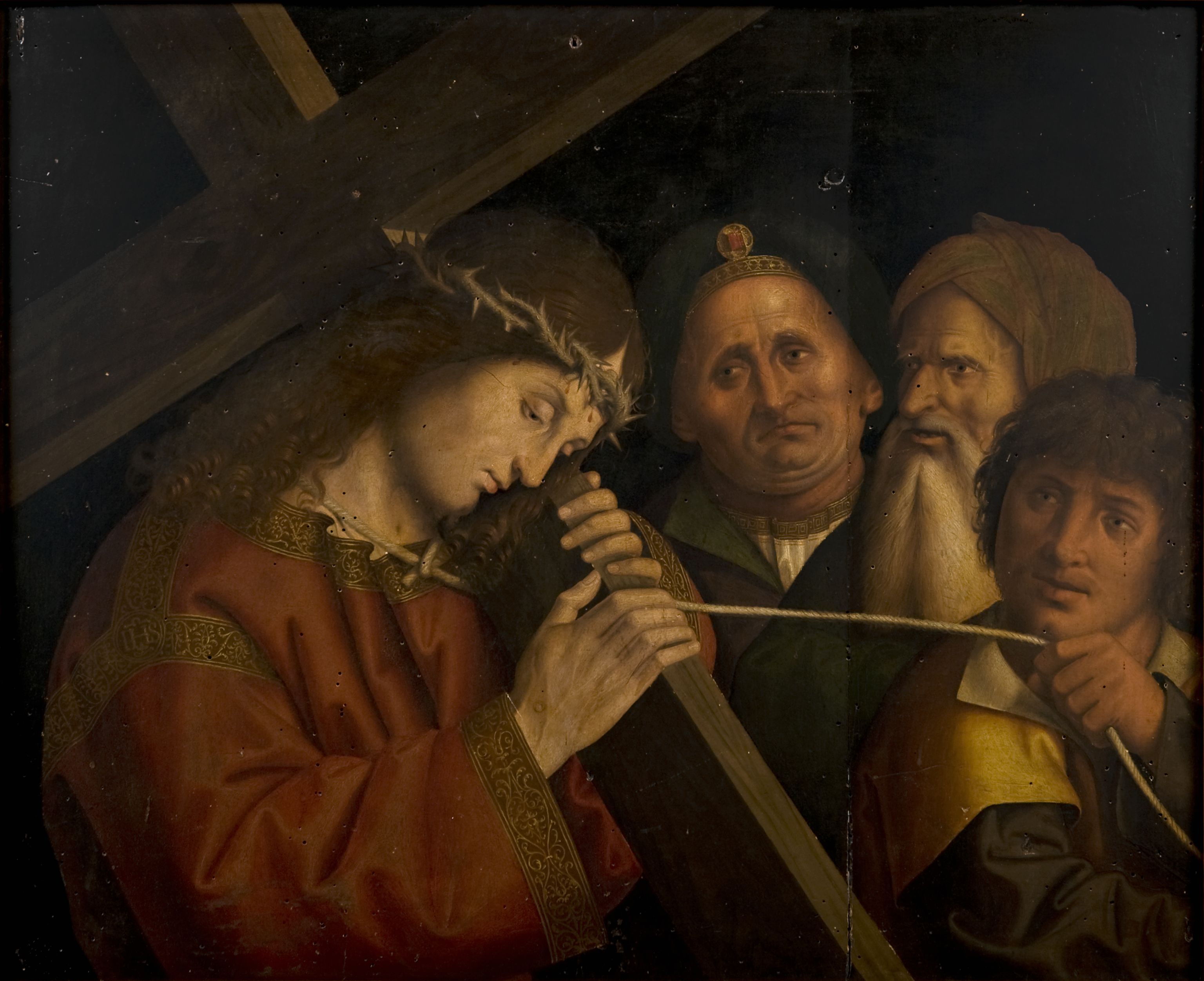
Marco Palmezzano
Born into a prominent family, Marco trained in the workshop of Melozzo da Forlì, as he frequently lets us know with pride when he signs his work “Marcus de Melotius”. After probably spending time in Rome with his master, he is first mentioned as an artist in his own right in 1492, when he received a commission for an altarpiece for the Chapel of St. Margaret in the church of Santa Maria Assunta in Dozza (Imola), his first definite work. Between 1493 and 1494 he worked with Melozzo on decorating the Feo Chapel in San Biagio in Forlì, which was unfortunately destroyed in World War II. He is known to have travelled to Venice c. 1495 where he was deeply influenced by the local painting, producing his masterpiece shortly afterwards, an Annunciation for the church of the Carmine in Forlì now in the city’s Museo di San Domenico. Soon becoming the unquestioned protagonist of the art scene in Romagna, he achieved his greatest recognition in 1506 when his altarpiece depicting the Communion of Apostles for the high altar of Forlì cathedral was unveiled in public during a visit to the city by Pope Julius II. In his final years Palmezzano’s style became weary and repetitive, pointing to his inability to keep up with the developments in painting originated by Raphael that were beginning to enjoy a certain popularity in Romagna.
Piero Offidani