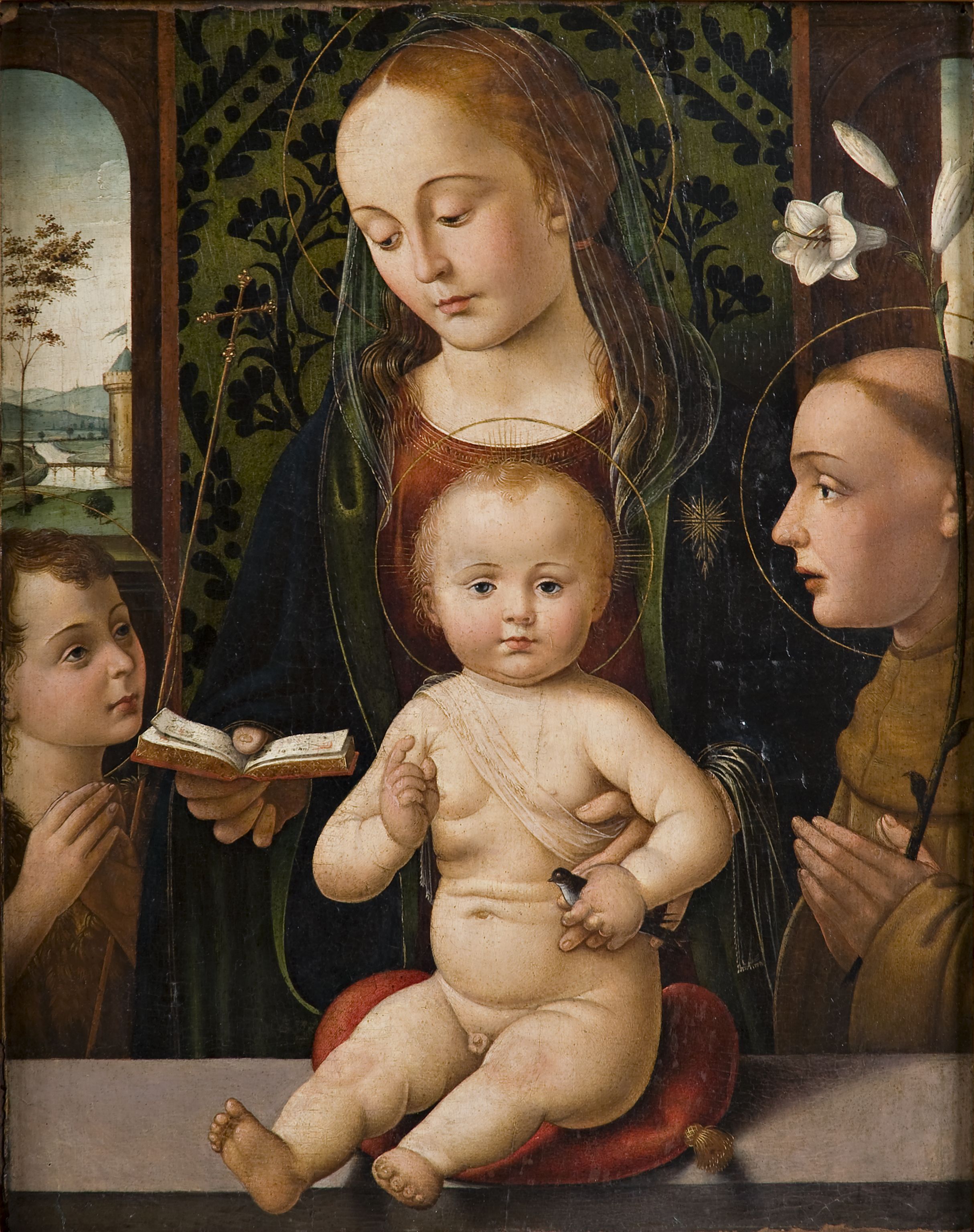
Biagio d’Antonio
The son of an embroiderer, Biagio di Antonio Tucci trained under Cosimo Rosselli and was registered as a painter with the Compagnia di San Luca, the artists’ guild, in 1472. After a brief partnership with Jacopo del Sellaio, he joined Verrocchio’s workshop, as we can see from his Madonna and Child with Saints for the church of San Domenico del Maglio now in the Szépmüvészeti Múzeum in Budapest, which he may have painted to a design by Verrocchio himself. Tucci began to work in Faenza c. the mid-1470s, both for religious orders and for such local dignitaries as Nicolò Ragnoli, treasurer to Carlo II Manfredi. He worked alongside Perugino, Ghirlandaio, Botticelli and Cosimo Rosselli on the decoration of the side walls in the Sistine Chapel between 1481 and ’82, the panel depicting the Crossing of the Red Sea being entirely by his hand. In the meantime, however, he also kept in touch with his patrons in Faenza who continued to commission various works from him over the years. In 1504 he was a member of the commission comprising Florence’s leading artists that had been tasked with choosing where Michelangelo’s David should be displayed.