


sht. 8
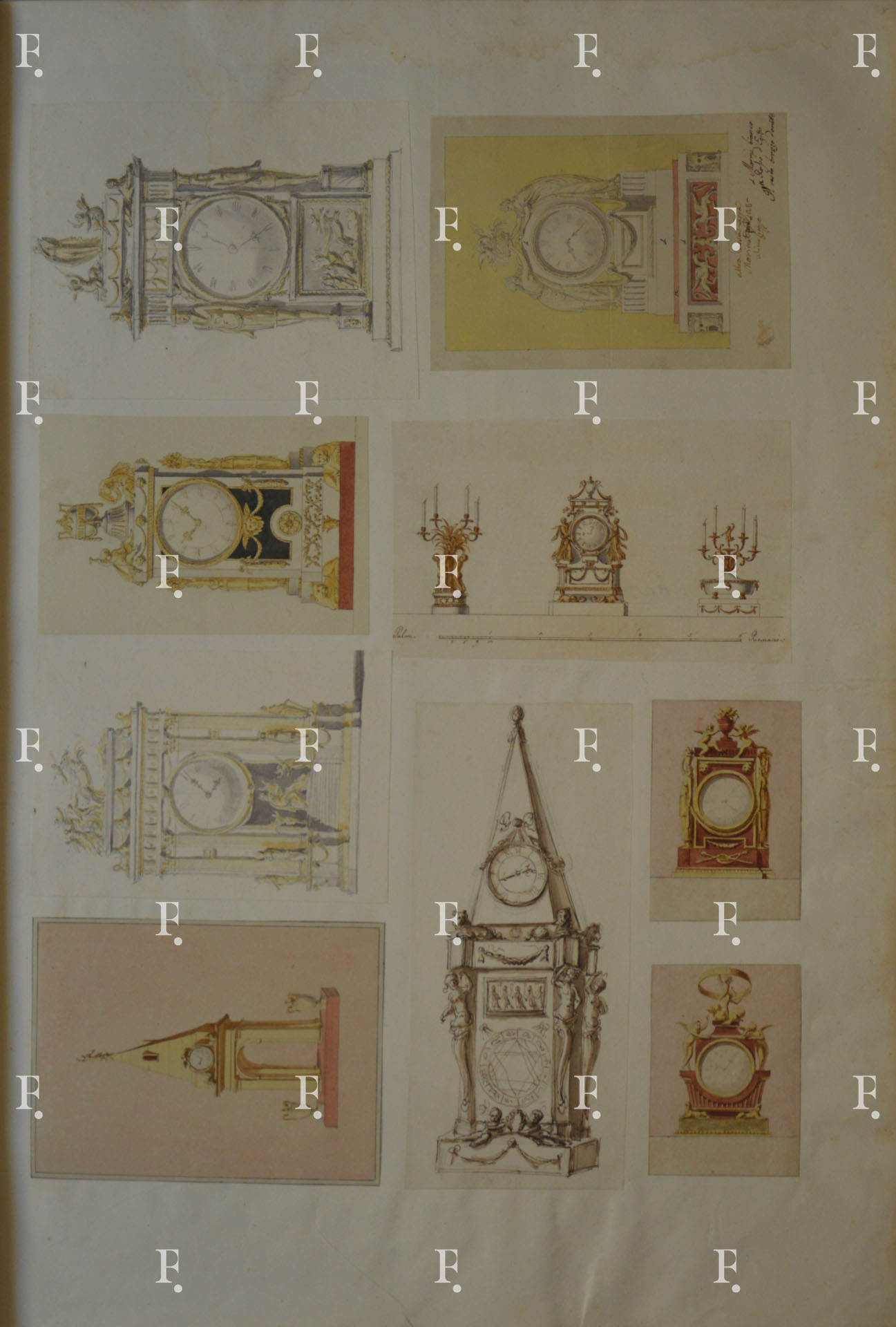
Giuseppe Valadier
B 1780 - 1785
C 1785 - 1790
D 1785 - 1790
E 1780 - 1785
F 1785 - 1790
G c. 1810
H c. 1790
I 1785 - 1790
B 210 x 145 mm
C 190 x 125 mm
D 135 x 230 mm
E 205 x 140 mm
F 125 x 85 mm
G 200 x 150 mm
H 275 x 125 mm
I 125 x 85 mm
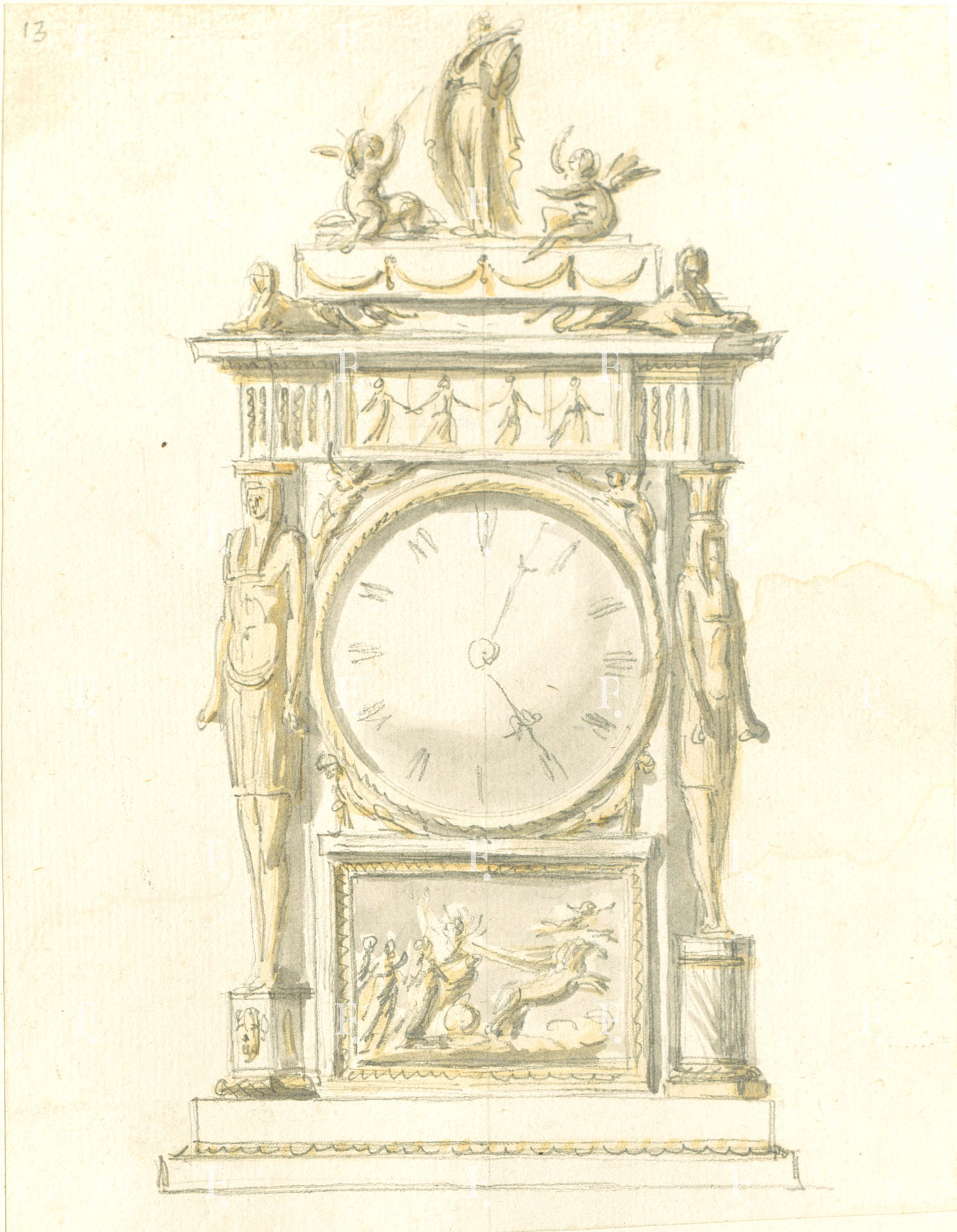
A
Giuseppe Valadier (?), Table clock with Egyptian atlases; on the crown, sphinxes, cupids and Minerva; on the base, relief with the chariot of Apollo, c. 1780-5, graphite, grey and yellow wash on paper, 225 x 170 mm., numbered upper left: “13”.
Bibliography: Leone 2019a, p. 82.
B
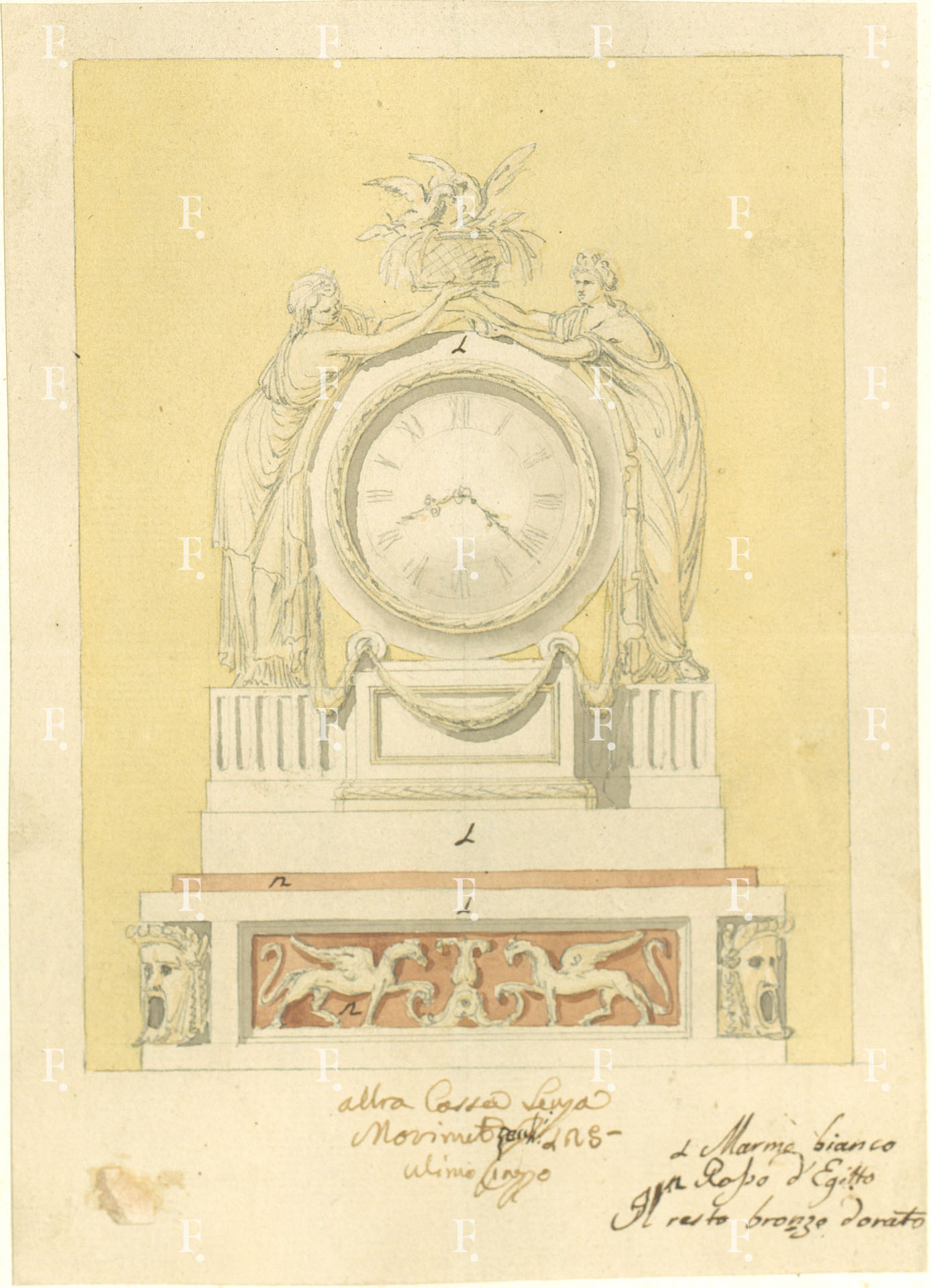
Giuseppe Valadier, Table clock with female figures; on the crown, doves in a basket; on the base, griffins and theatrical masks, c. 1780-5, graphite, grey, red and yellow wash on paper, 210 x 145 mm., inscription in pen on the clock from top to bottom referring to the legend below: “1”; “1”; “2”; “1”; inscription in pen bottom centre: “altra Cassa Senza / Movimento s.i 28 – / ultimo pezzo”; inscription in pen bottom right: “1 Marmo bianco / 2 Rosso d’Egitto / Il resto ormolu”.
Two figures very similar to the allegorical female figures on each side of the clock case are also found on a table clock designed by Luigi Valadier for Cardinal Henry Benedict Stuart, Duke of York, in the first half of the 1780s (Oxford, Ashmolean Museum).
Bibliography: González-Palacios 1993a, II, p. 200, fig. 373; Leone 2019a, p. 82.
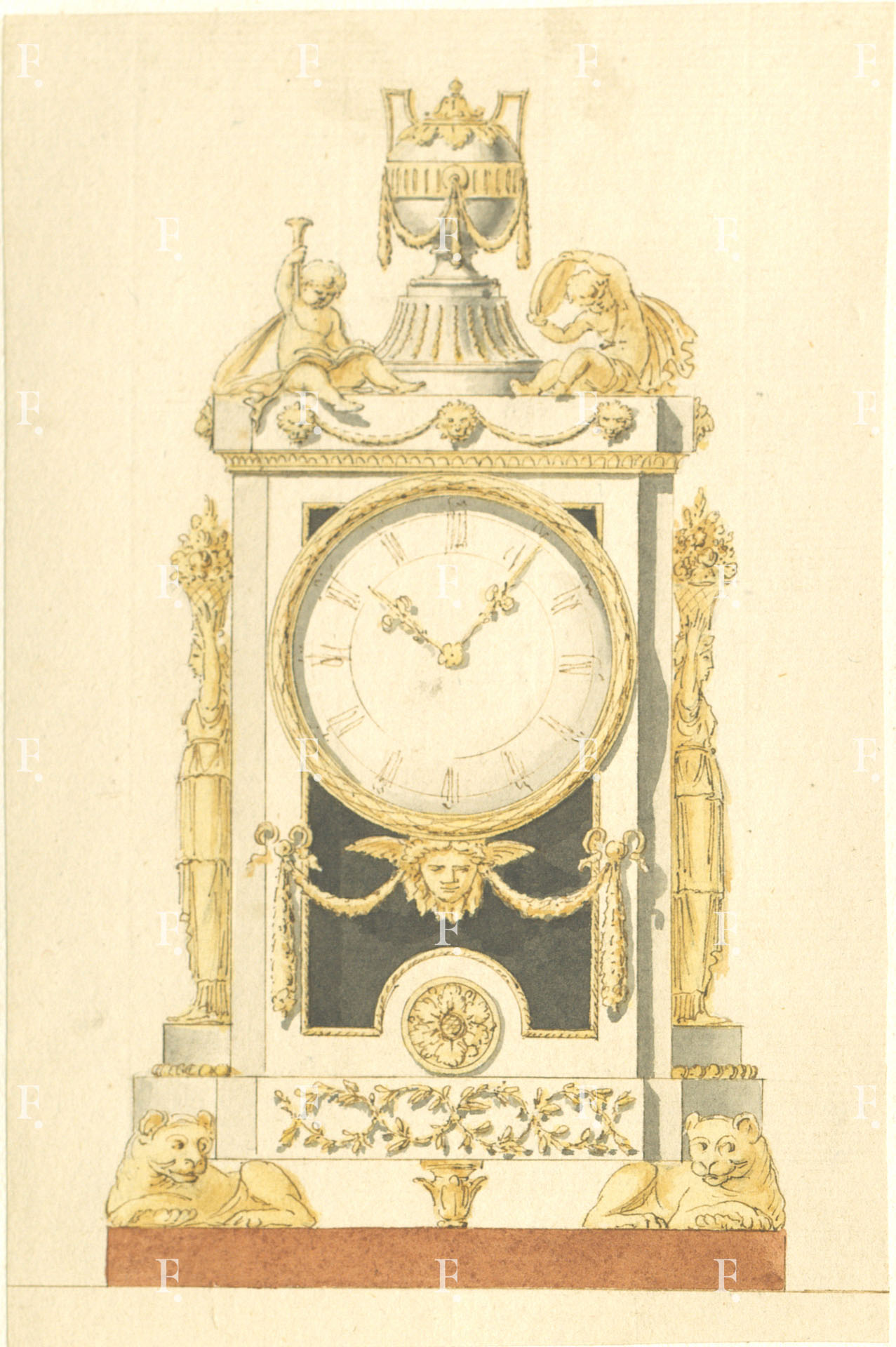
C
Giuseppe Valadier, Table clock with canephorae; on the crown, an amphora with putti draped on either side; on the base, lionesses crouching, c. 1785-90, graphite, pen, grey ink, brown ink, yellow, grey, dark grey and dark red wash on paper, 190 x 125 mm.
Bibliography: González-Palacios 2018, p. 244, fig. 5_36; Leone 2019a, p. 82; Valadier. Segno e architettura 1985, pp. 397, 400, cat. 564.
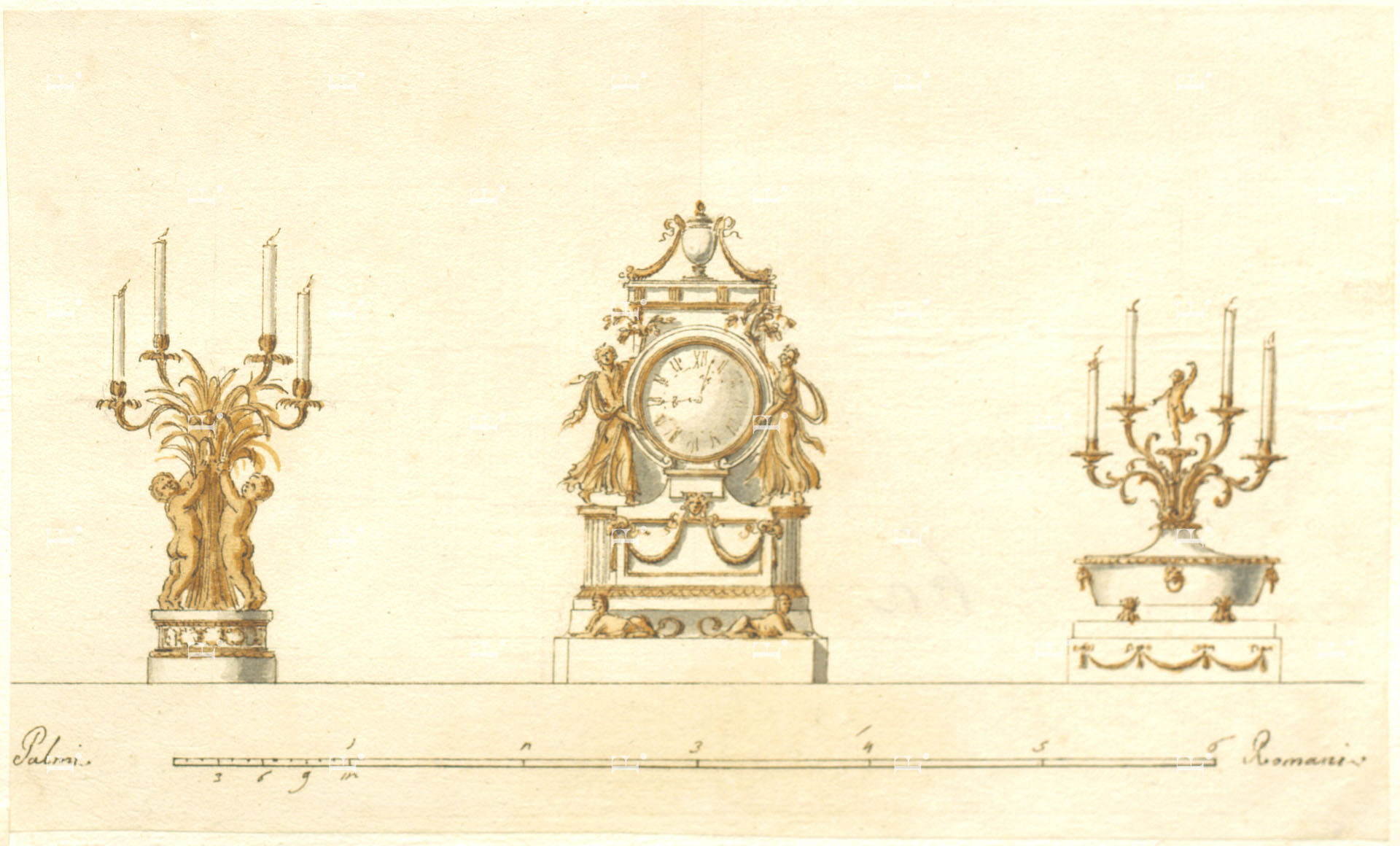
D
Workshop of Giuseppe Valadier, Table clock and two candlesticks, c. 1785-90, graphite, pen, grey ink, brown and grey wash on paper, 135 x 230 mm.; it bears the Roman palm scale in the lower margin.
Bibliography: González-Palacios 2018, p. 239, fig. 5_31; Leone 2019a, p. 82.
E
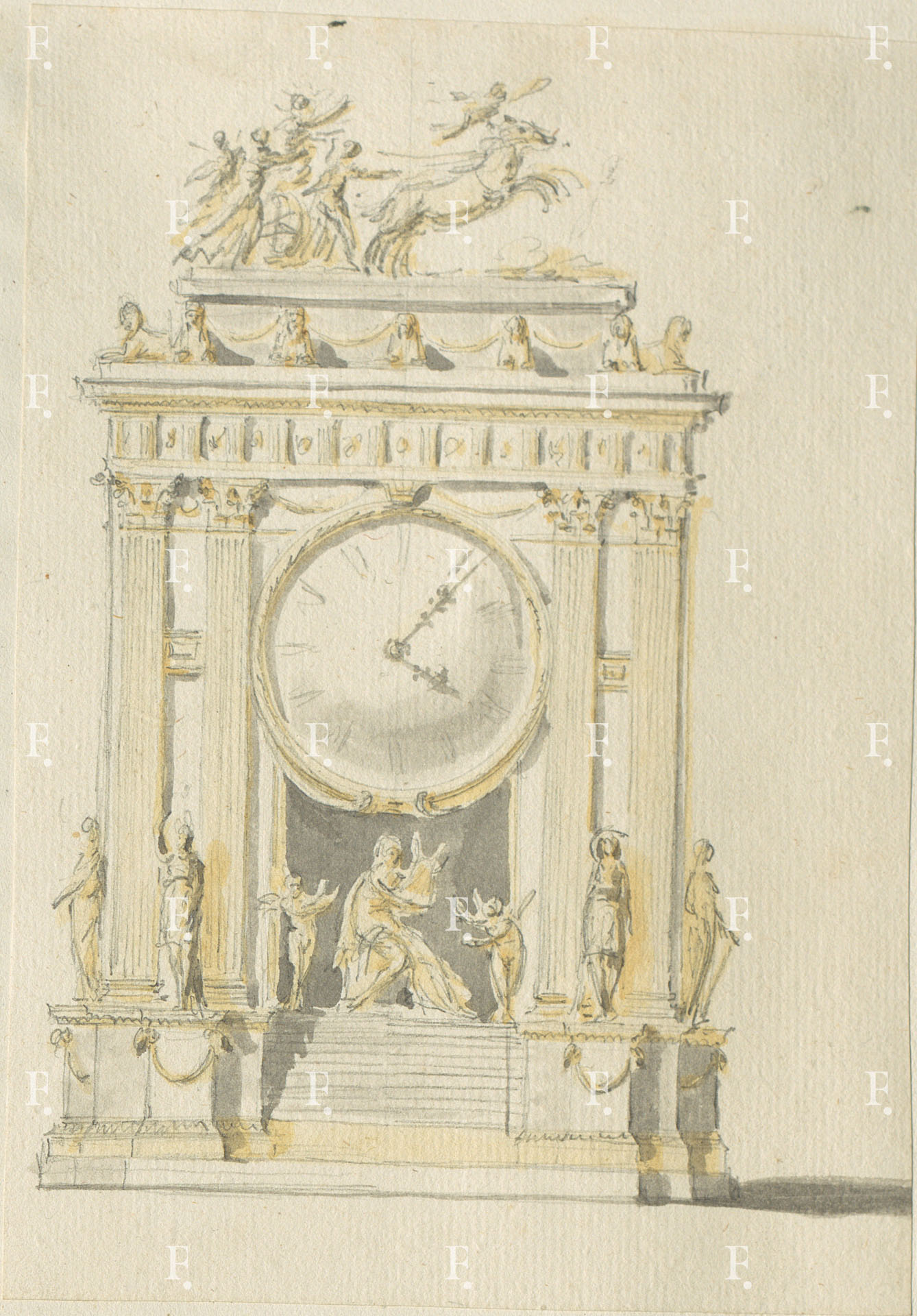
Giuseppe Valadier (?), Table clock in the shape of a stepped temple with a mixtilinear base; main body with Corinthian pilasters; on the crown, the chariot of Apollo amid muses surrounded by sphinxes in the lower register, 1780-5, graphite, grey and yellow wash on paper, 205 x 140 mm. This is the same model with a number of variations as that illustrated in drawing B on sht. 20
Bibliography: Leone 2019a, p. 82.
F
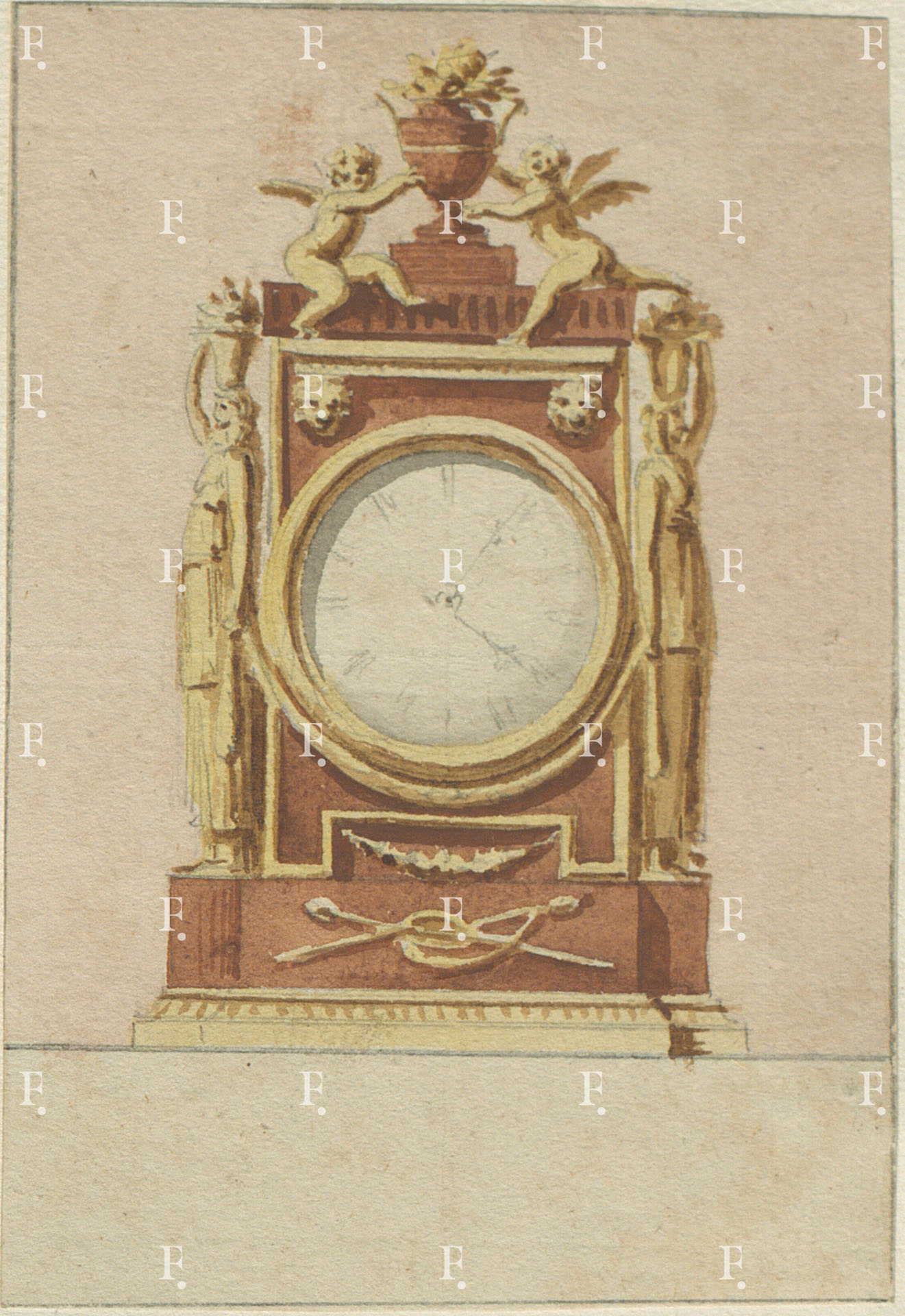
Workshop of Giuseppe Valadier, Table clock in Egyptian rosso antico marble and ormolu with canephorae and winged putti in ormolu, c. 1785-90, graphite, dark red, yellow and brown wash on paper, 125 x 85 mm.
Bibliography: Leone 2019a, p. 82.
G
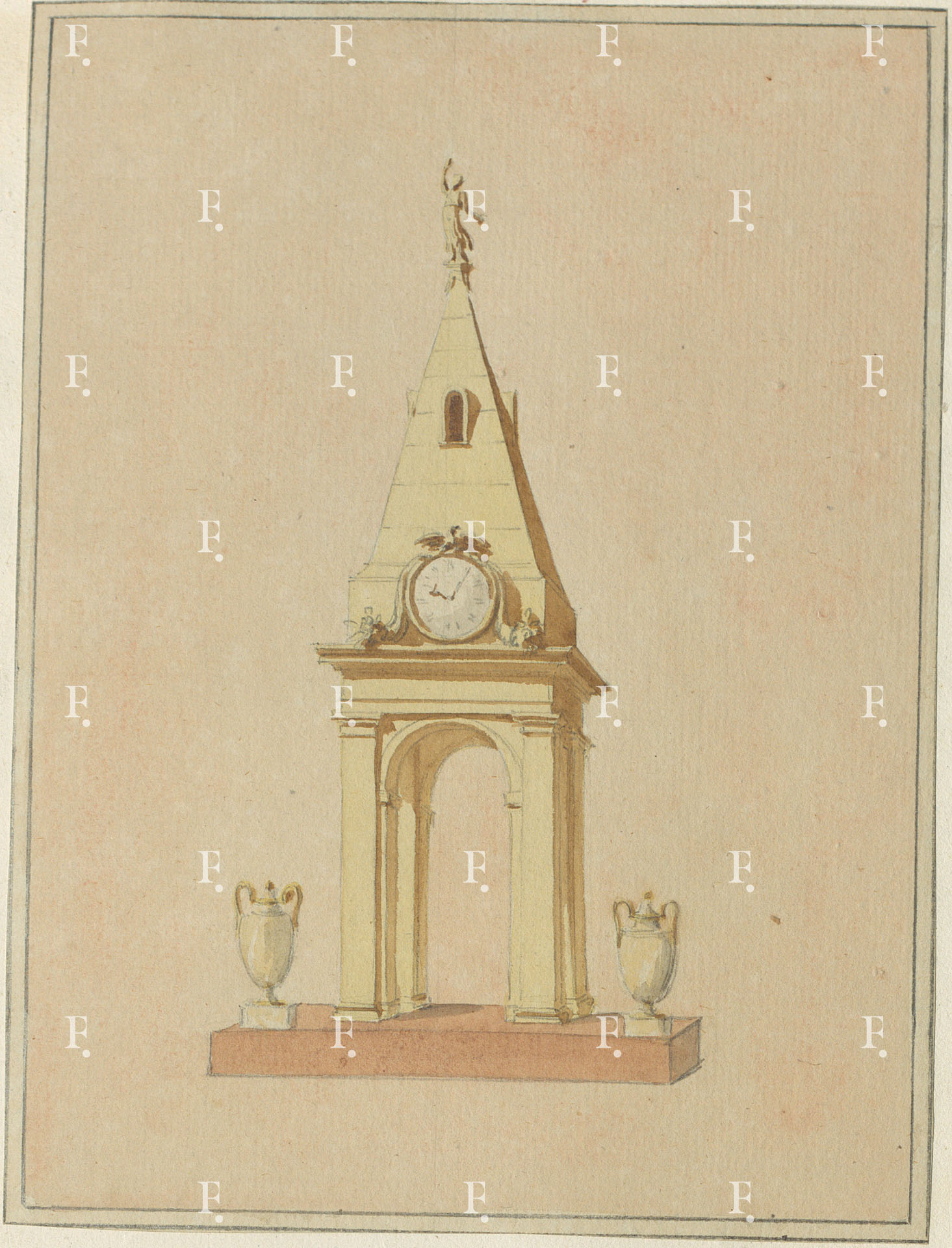
Workshop of Giuseppe Valadier, Table clock in the shape of a bell-tower with pinnacle, c. 1810, graphite, red, yellow and brown wash on paper, 200 x 150 mm.
Bibliography: Leone 2019a, p. 82.
H
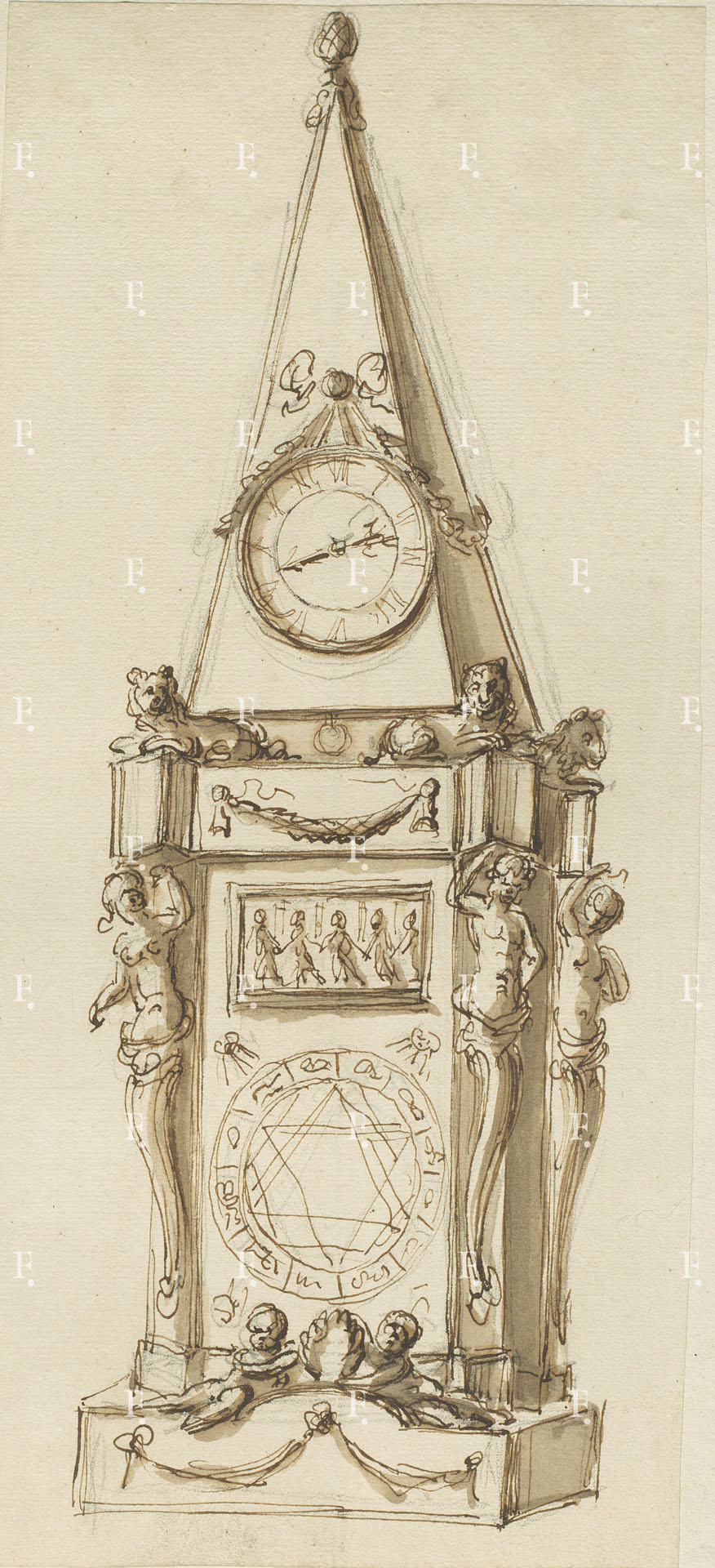
Giuseppe Valadier (?), Octagonal table clock with caryatids and atlases on a corbel; upper element in the shape of a bell-tower with pinnacle, c. 1790, graphite, pen, brown ink, grey wash on paper, 275 x 125 mm.
Bibliography: Leone 2019a, p. 82; Valeriani 1991-2, p. 110, fig. 6.
I
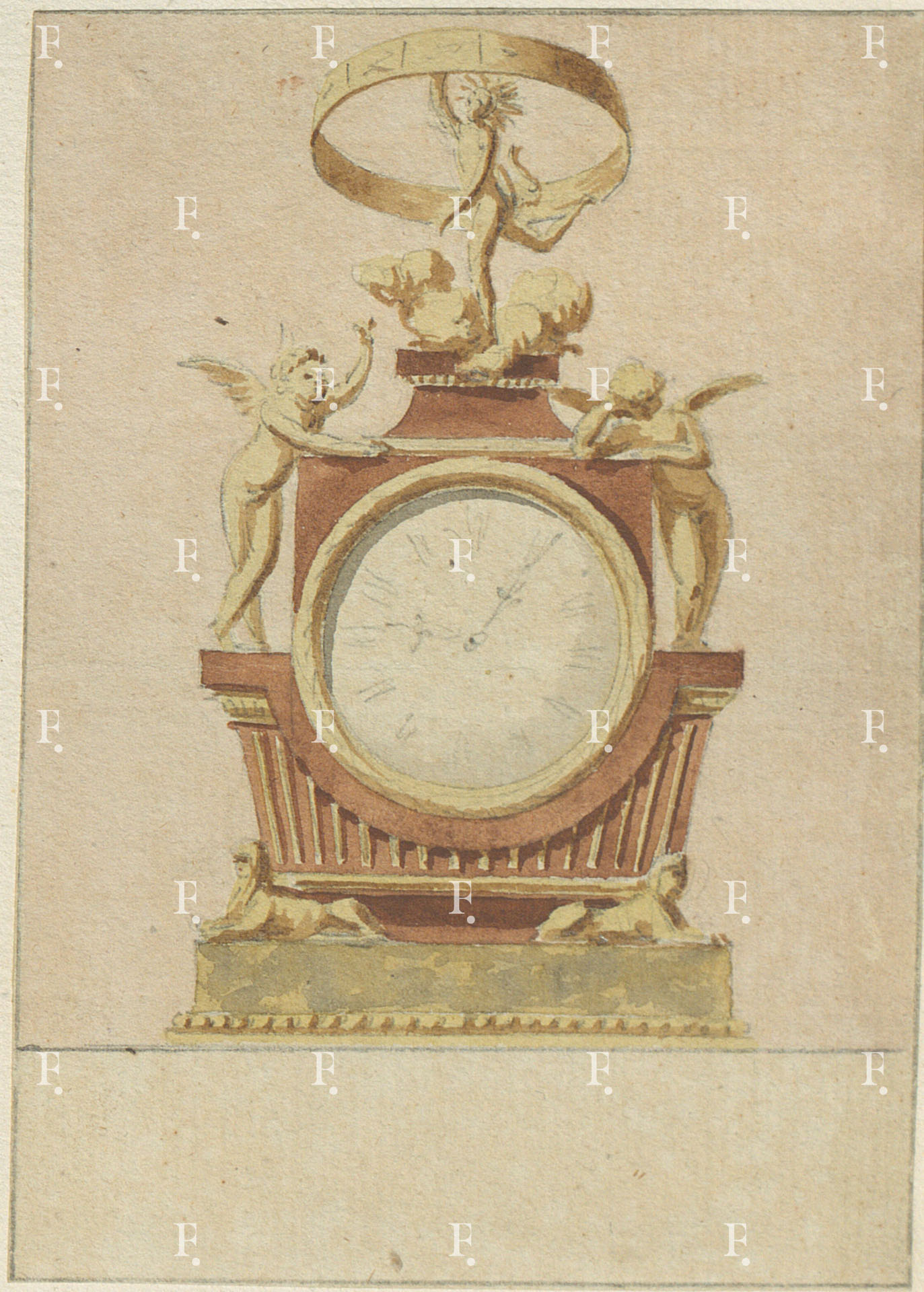
Workshop of Giuseppe Valadier, Table clock in Egyptian rosso antico marble and ormolu; sphinxes on the base and winged genies on either side of the case; at the top, Apollo with the Zodiac belt, c. 1785-90, graphite, dark red, yellow, brown and grey wash on paper, 125 x 85 mm.
Bibliography: Leone 2019a, p. 82.
